What I did not expect from Perpignan, France

Written by Nadia Podrabinek
Hello, my name is Nadia. I usually write about traveling (there are so many places to fit all the lifestyles), relocation, and living in a foreign country (adapting to a different culture). My travels stretch beyond Spain, with journeys to the US, Italy, Norway, Portugal, and France. Relocating to Spain in 2018, I lived in cities from Barcelona to Madrid, currently calling Valencia home. Follow me on Twitter, Facebook, Instagram, or LinkedIn! ... show more
Long time no see? I was busy traveling and writing some stories for you guys!
So… this June I spent a few days on the French Mediterranean coast near Perpignan.
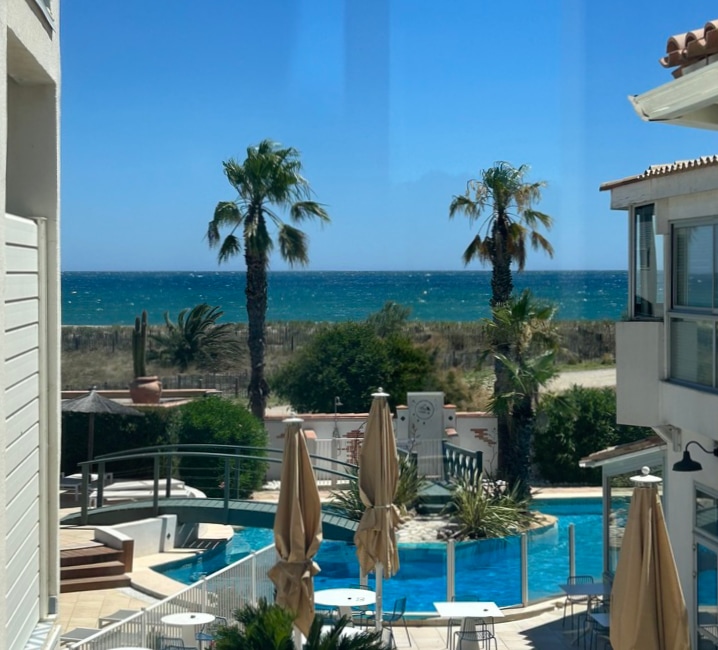
To be exact, I stayed in Saint-Cyprien Plage, at the beautiful hotel caleld Residence Les Bulles de Mer. We came from Andorra, so this trip started high in the mountains and ended at the sea, all in one afternoon.
I expected a simple beach holiday. What I got: nice and cozy hotel, a wind with its own name, and a piece of history that I honestly didn’t know before.
Quick facts
- Getting there: by car from Andorra, about 150-170 km and 2.5-3 hours without long stops
- Nearest airport: Perpignan-Rivesaltes, about 35 km away
- Language: French, but you will see Catalan everywhere, as this is French Catalonia (huh!)
The road from Andorra to Perpignan
This drive is a trip of its own, so you dont want to rush it.
From Andorra you climb up to the Port d’Envalira, the highest paved road pass in the Pyrenees. Even in June you can see patches of snow up there, and sometimes you will be driving through clouds.
Then you go down to Pas de la Casa, the border town full of duty-free shops, and cross into France.
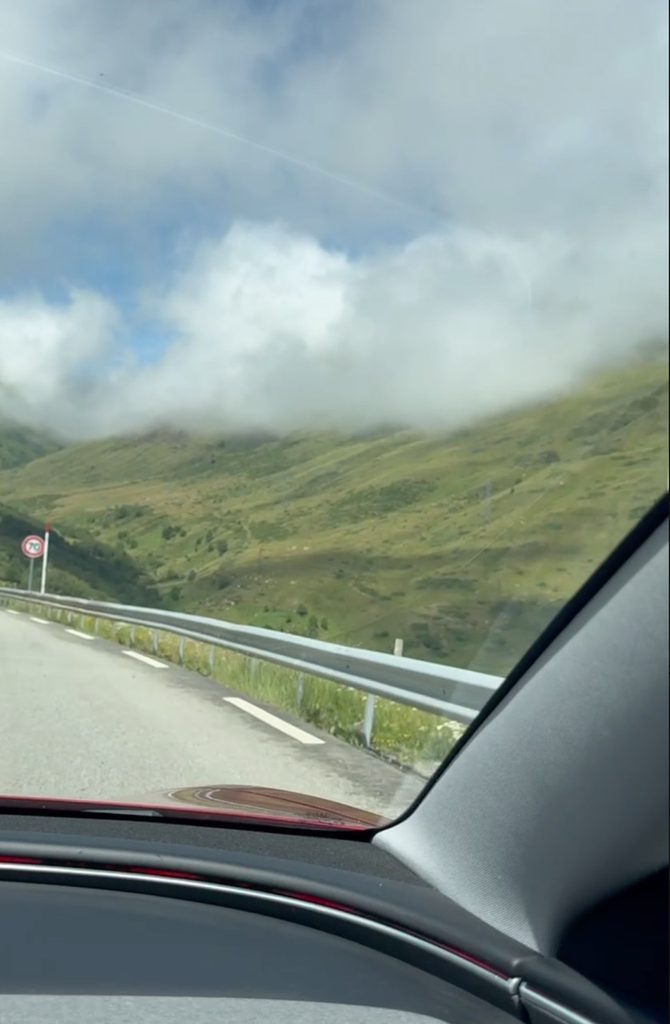
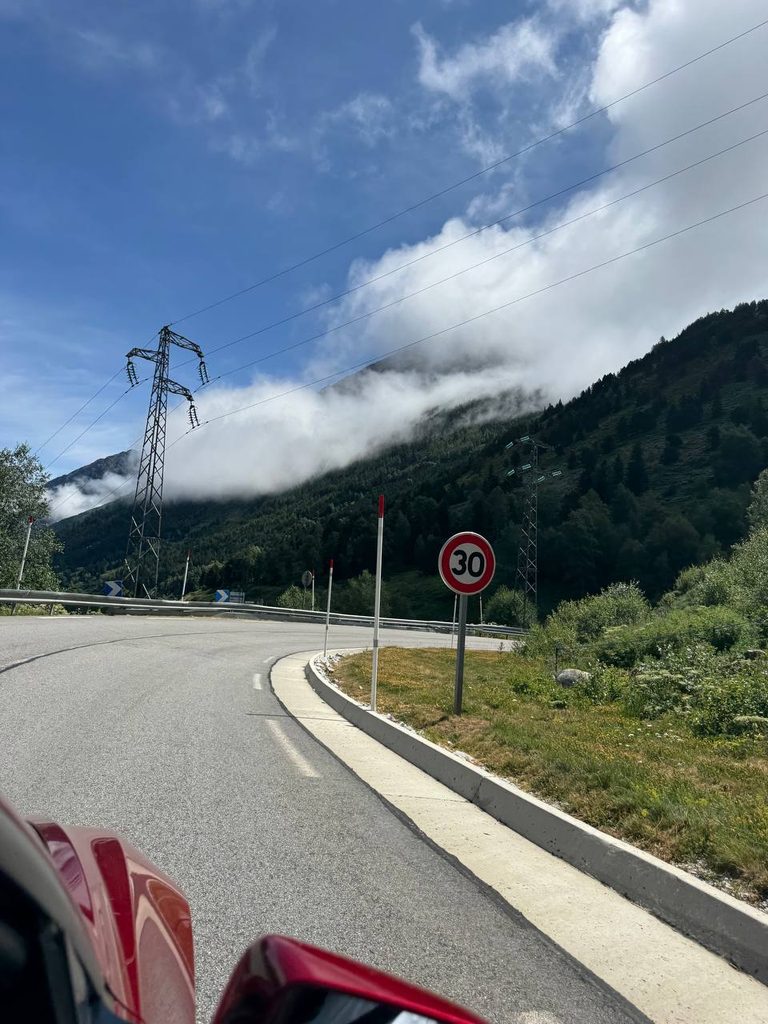
After the border the road takes you over the Col de Puymorens (or through the tunnel under it) into the Cerdagne, a wide, sunny high valley with green meadows and little stone villages. Then you follow the N116 down the valley of the Têt river:
- Mont-Louis – a star-shaped fortress town built by Vauban in the 17th century, one of the highest fortified towns in France.
- Villefranche-de-Conflent – a tiny medieval town closed inside its walls. It’s a perfect stop to stretch your legs and get a coffee. The little yellow train (Le Train Jaune) also starts here and climbs back up to the Cerdagne, if you have an extra day.
- Prades and the orchards – the closer you get to Perpignan, the more peaches, apricots and vineyards you see along the road. In June, look for fruit stands.
On the last stretch you will see Mont Canigou behind you, the sacred mountain of the Catalans. And then, quite suddenly, it’s flat, hot, and it smells like the sea.
Pro tip: fill up the tank in Andorra, fuel is cheaper there. And download offline maps – there are places in the mountains with no signal.
Résidence Les Bulles de Mer (Pierre & Vacances)
I’ll say it straight away – this is a really nice place to stay.
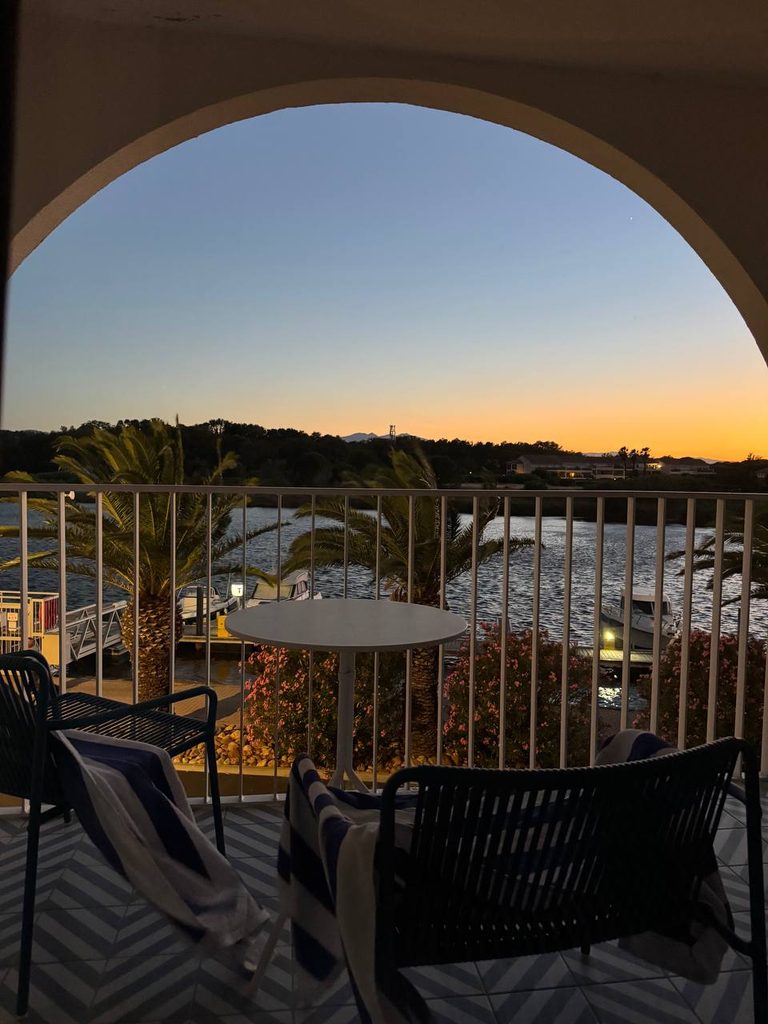
The residence sits right at Plage de la Lagune in the south part of Saint-Cyprien Plage, with the sea on one side and a lagoon on the other. You literally walk out to the sand in a couple of minutes. It’s a quieter part of the resort, away from the busy port area.
What I liked:
- The apartments. These are proper apartments with a kitchenette, air conditioning and a balcony or terrace, not just hotel rooms. Depending on the type, you get a view of the sea, the lagoon or the pool. Morning coffee on the balcony with a sea view was my favourite part of the day.
- The pool. The outdoor pool is open in season (roughly May to September), so in June it was fully working.
- The spa. There is a wellness area with massages. Note that access is for guests who book a treatment, it’s not a free spa included in the stay.
- Restaurant and bar on site, so you don’t have to cook every night if you don’t want to.
- Free parking and an EV charging station, which is great if you come by car like we did.
What to know before you book:
- There is no lift in some buildings, and some apartments are reached only by stairs. If you travel with heavy luggage, a stroller or older parents, ask for a ground-floor unit.
- In high season (July–August) it gets busier and pricier. June was a great choice – warm sea, fewer people.
Our hotel
Here is something nobody told me before the trip: the coast around Perpignan is one of the windiest places in France!
The local wind even has its own name – the Tramontane (la Tramontane in French, la Tramuntana in Catalan).
It comes down from the north-west, between the Pyrenees and the Massif Central, and speeds up as it rushes toward the sea. It blows on roughly a third of the days of the year around Perpignan – gusts of 100 km/h are not unusual in the most exposed places. Also, it can start very suddenly, even on a perfect blue-sky day, and last for one day or for several.
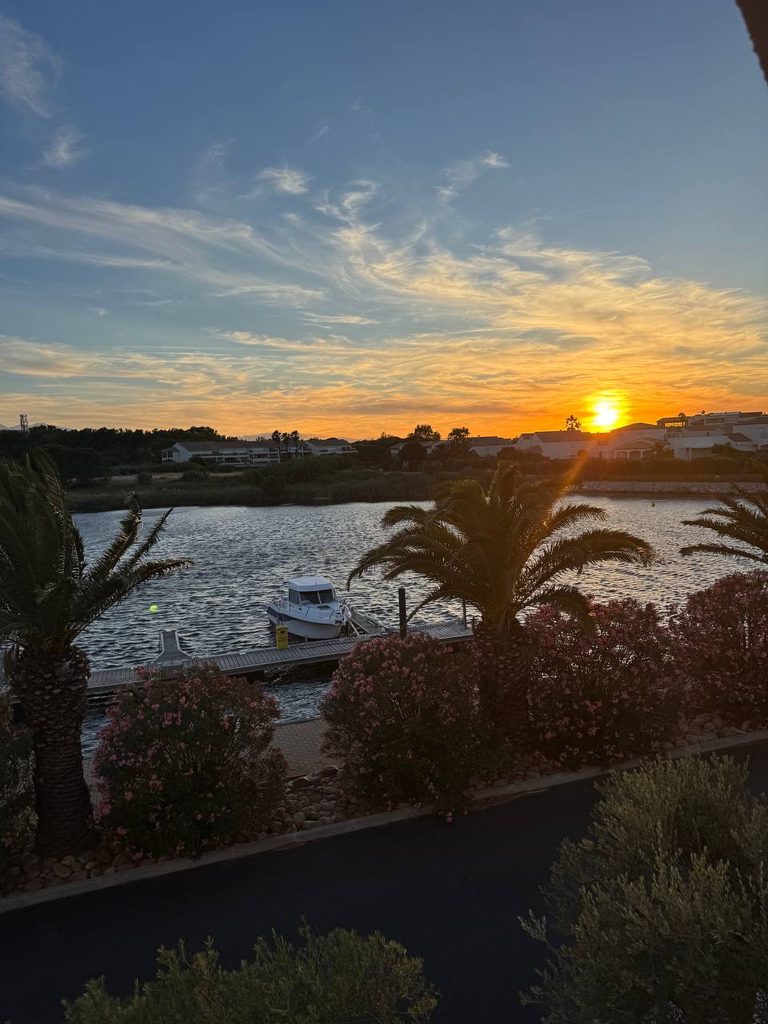
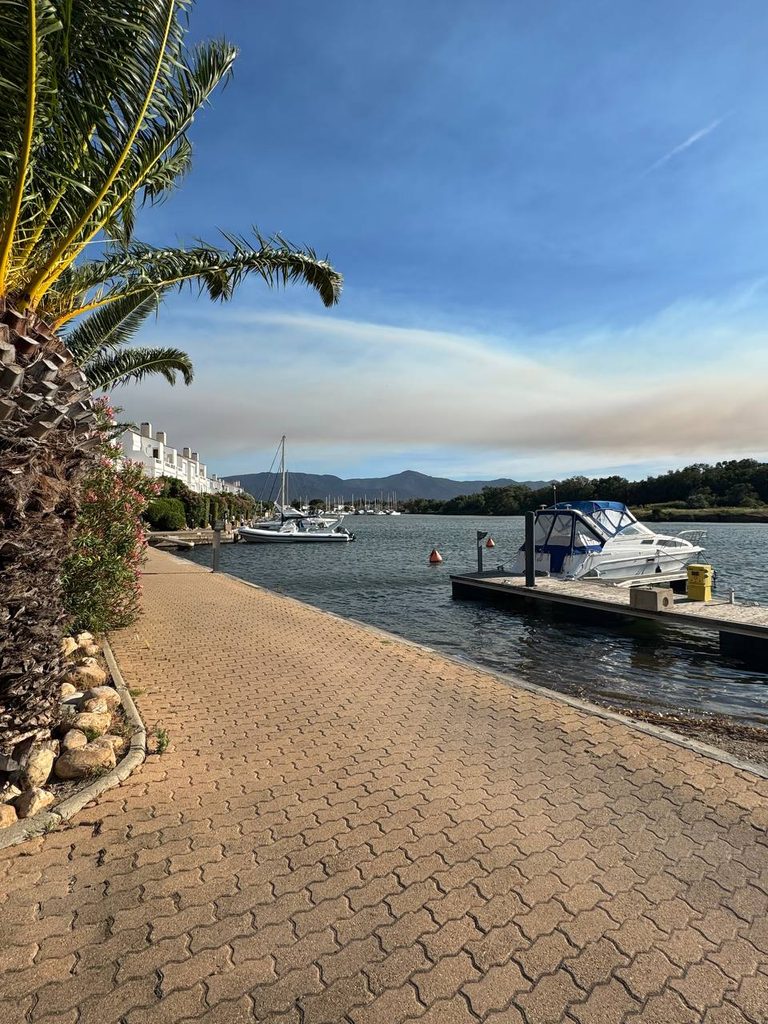
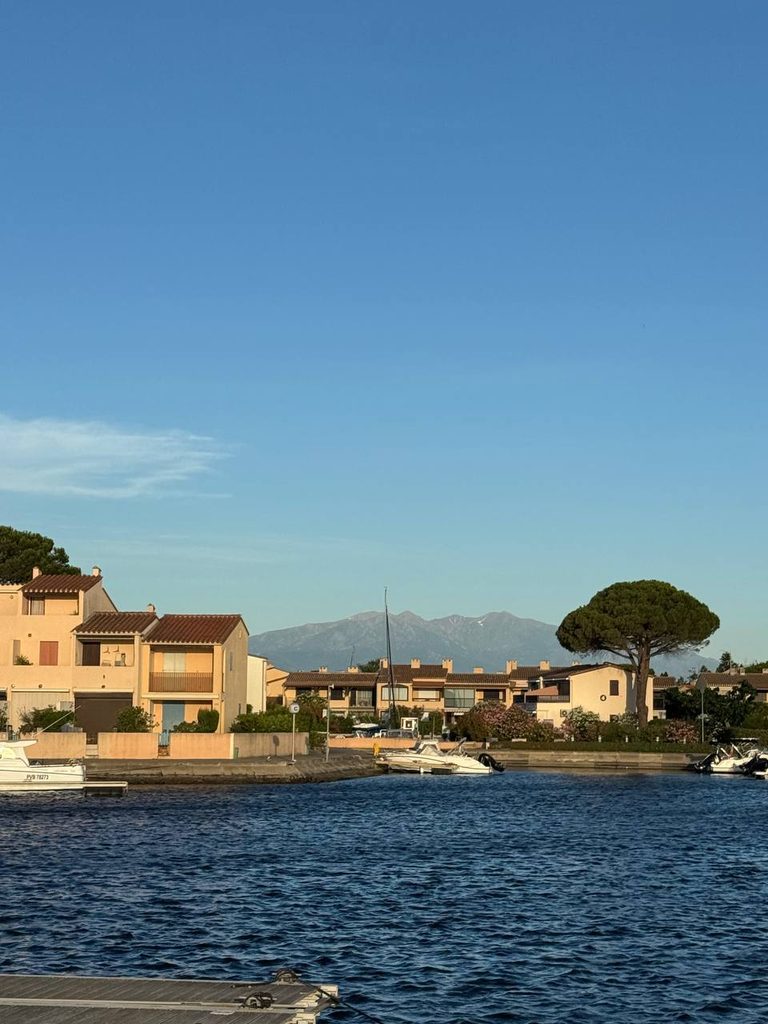
The funny thing is that the Tramontane brings perfect weather: it’s dry, it clears all the clouds, and the sky becomes deep blue. But on the beach it’s another story – sand flying in your face, umbrellas flying away, and the sea going rough. Because it blows from the land toward the sea, inflatable mattresses and small boats can be pushed out from the shore very fast.
I clearly see why this coast is a paradise for windsurfers and kitesurfers – and less of a paradise for families with beach umbrellas.
What to do when the Tramontane blows:
- Don’t use inflatables in the sea. Seriously.
- Hide in the lagoon side or by the pool, it’s more protected.
- Use the day for a trip inland – Perpignan, Elne, Collioure or the mountains.
- Keep a light jacket with you, the wind makes it feel much colder than the thermometer says.
- I didn’t try to swim in the sea – it was scary to me
The tragedy on these beaches: the Retirada of 1939
This is the part of the post I thought about for a long time after the trip.
When you walk on the wide, beautiful beaches of Saint-Cyprien and Argelès-sur-Mer today, it’s hard to imagine what happened here less than 90 years ago.
At the end of January 1939, the Spanish Civil War was almost over. Barcelona fell to Franco’s troops on January 26, and the Republicans understood what was coming next. In just a few weeks, around 450,000–500,000 people – soldiers, women, children, old people – walked across the Pyrenees into France, in winter, through snow, often with nothing but the clothes they were wearing. The Spanish and Catalans call this exodus La Retirada (“the retreat”).
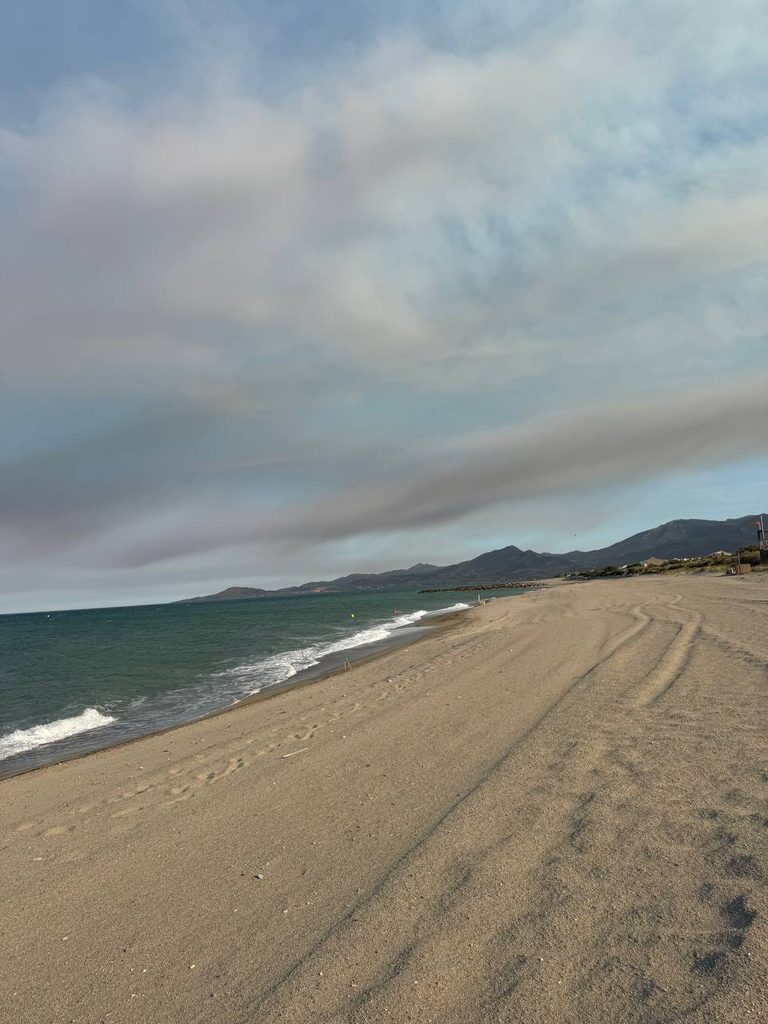
France was not ready (and, honestly, not very willing) to receive so many people. The authorities’ solution was to put them on the beaches.
- In early February 1939, camps were set up right on the sand in Argelès-sur-Mer, Saint-Cyprien and later Le Barcarès.
- These were just stretches of beach surrounded by barbed wire and guarded by soldiers. At first there were no barracks, no toilets, no clean water. People dug holes in the sand to protect themselves from the wind – yes, the same Tramontane – and the cold winter nights.
- The camp in Saint-Cyprien held about 90,000 people in March 1939. Argelès held around 100,000 at its peak.
- The water was contaminated, and dysentery, typhoid and other diseases spread fast. Thousands of people died in the camps of the region in the first months, many of them children and old people.
Some refugees were later allowed to leave – to Latin America (Mexico welcomed many of them), to work in France, or into the French army when World War II began. Others were forced back to Spain. The Saint-Cyprien camp stayed open until October 1940, when floods destroyed it, and by then it held other prisoners too, including Jewish refugees from Germany and Belgium.
There is one light story in all of this. In the nearby town of Elne, a young Swiss nurse, Elisabeth Eidenbenz, opened a maternity home in 1939 so that pregnant women could give birth outside the camps. Almost 600 babies were born there, Spanish refugees first and later Jewish children too. You can visit the Maternité Suisse d’Elne today, and I really recommend it.
The great Spanish poet Antonio Machado crossed the border during the Retirada too. He died a few weeks later in Collioure, just south of Argelès, and he is buried there. People still leave flowers and letters on his grave.
If you want to learn more while you are there:
- Mémorial du camp d’Argelès in Argelès-sur-Mer – a small museum about the camp, opened in 2014.
- The monument on the north beach of Argelès, dedicated to the 100,000 Spanish Republicans interned there.
- Maternité Suisse d’Elne – between Saint-Cyprien and Argelès, about 10 minutes by car.
- Antonio Machado’s grave in the Collioure cemetery.
I’m not saying all this to spoil anyone’s beach holiday. But I think it’s important to know where you are swimming and sunbathing. The sea is the same, and it is beautiful – but these beaches remember.
Argelès-sur-Mer – the nice neighbour
Argelès-sur-Mer is the next resort south of Saint-Cyprien, about 15 minutes by car. It is actually 2 places in one:
- Argelès-Village – the old Catalan village a bit inland, with narrow streets, the church of Notre-Dame-del-Prat and a much calmer atmosphere.
- Argelès-Plage – the beach resort with a long seafront promenade, cafés, campsites and a very lively summer vibe.
My favourite part is the south end, near Le Racou. This is where the long sandy beaches stop and the rocky coast, the Côte Vermeille, begins. The water is clearer, the beach is smaller and there are tiny houses right on the sand. From here, a coastal path goes along the cliffs to Collioure – one of the prettiest walks in this area. Take water and good shoes.
If you go to Argelès, combine it with the Mémorial du camp I mentioned above. It’s a good way to see both sides of this place in one day.
My tips for Saint-Cyprien Plage
- Go in June or September. The sea is already (or still) warm, and there are far fewer people than in July and August.
- Rent a car. Public transport exists, but with a car you can easily see Perpignan, Elne, Argelès, Collioure and the mountains.
- Check the wind forecast, not just the sun forecast. Windy.com is my go-to app.
- Try Catalan food: anchovies from Collioure, boles de picolat (meatballs), local peaches and apricots, and a glass of Banyuls sweet wine.
- Visit Perpignan for half a day – the Palace of the Kings of Majorca and the old town are worth it.
Have a nice trip, and say “hi” to the Tramontane for me!
Nadia
